Restorative Dentistry, Maple, ON

Dental Implants in Maple, ON

Dental implants are one of the closest options dentistry has to replacing a real tooth, designed to look, feel, and function much like the natural version. At Salvador Family Dentistry, Dr. Luca uses guided surgical technology for precise, planned placement, right here in Maple.
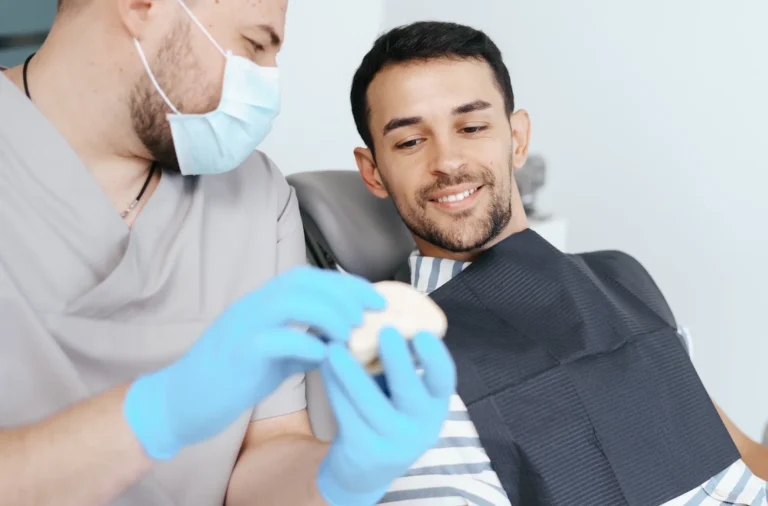
Masked dentist in blue gloves holds a dental model beside a smiling man reclining in a dental chair

What Is a Dental Implant?

A dental implant is a small titanium post, roughly the size of a screw, placed into the jawbone where a missing tooth used to be. Over time it fuses with the bone, a process called osseointegration, creating a stable foundation. On top of that foundation, we attach a custom-made porcelain crown designed to look, feel, and function like a natural tooth. The Canadian Dental Association also covers implants as part of its general restorative procedures overview. Unlike dentures, which can slip, or bridges, which require grinding down adjacent healthy teeth, implants stand completely on their own. They are a widely used option for tooth replacement, and at Salvador Family Dentistry, Dr. Luca uses guided implant surgery to support careful, planned placement. Patients researching what to know before getting an implant can also review our guide on the topic.

Guided Surgery: Careful Planning Before Treatment

Dr. Luca invested in guided implant surgery technology because he believes precision matters, not just for the result, but for your recovery experience.

01

3D Digital Planning
Before surgery, a CBCT scan creates a detailed 3D map of your jaw. Dr. Luca plans the exact angle, depth, and position of the implant digitally, before picking up a single tool.

02

Custom Surgical Guide
A precision-fit surgical guide ensures the implant is placed exactly as planned. Less tissue disruption, less margin for error, faster healing.

03

Planned With Precision
Guided surgery is designed to support precise, planned implant placement. It’s not optional for us, it’s standard practice.

Implants vs. Bridges vs. Dentures: An Honest Comparison

Implants aren’t the only tooth replacement option, and which one is right for you depends on your bone health, budget, and goals. Here’s how the three most common options compare.
Feels Like a Real Tooth
Implants are designed to be fixed securely in the jaw and function much like natural teeth. You bite, chew, and smile with confidence. Bridges feel partial; dentures can shift and slip.
Preserves Your Jawbone
When a tooth is lost, the jawbone beneath it begins to resorb. An implant’s titanium root stimulates the bone much like a natural root, helping to prevent the bone loss that bridges and dentures cannot stop.
No Impact on Adjacent Teeth
Bridges require grinding down the healthy teeth on either side to create anchors. Implants stand independently, so your surrounding teeth stay untouched.
Built to Last
With proper care, implants are designed for long-term durability. Bridges and dentures typically need replacement sooner. Implants offer strong long-term value when properly maintained.

What to Expect: From Consultation to Final Crown

Why Patients Drive to Maple for Their Implants

Dr. Luca’s HTDS continuing education training means your implant is placed by someone who has studied the biology of osseointegration in depth, not just the technique.
Advanced Implant Training
Dr. Luca’s HTDS continuing education training means your implant is placed by someone who has studied the biology of osseointegration in depth, not just the technique.
Free Consultation
Your consultation includes a full assessment and honest conversation about whether implants are right for your specific situation, with zero obligation to proceed.
All Insurance Plans Accepted
We work with most insurance providers and review your specific coverage before treatment begins. No financial surprises on top of an already significant decision.

Other Services at Salvador Family Dentistry

Ongoing preventive care keeps your implant and all your natural teeth healthy for the long term.
Root Canal Treatment
Save a natural tooth before it reaches the point of extraction; modern root canal treatment is designed to be comfortable.
Veneers
Restore the appearance of remaining teeth alongside your new implant for a complete, cohesive smile.
Routine Check-ups & Cleanings
Ongoing preventive care keeps your implant — and all your natural teeth — healthy for the long term.

Frequently Asked Questions

The questions Maple and Vaughan patients ask us most about dental implants. Call us if yours isn’t here.
Does getting a dental implant hurt?
The surgery is done under local anesthetic, so you will feel pressure, not pain, during the procedure itself. Post-procedure soreness is typically mild and manageable with over-the-counter pain relief, and it generally subsides within a few days as the area heals. Everyone’s experience of discomfort differs somewhat based on the complexity of the case and individual pain tolerance, so our team discusses what to realistically expect for your specific situation at the consultation. Detailed aftercare instructions are provided before you leave, covering what is normal in the days that follow and what would be unusual enough to warrant a call to the clinic.
The implant post itself is designed for long-term durability with proper care and can function well for many years once fully integrated with the bone. The porcelain crown on top may eventually need replacing due to normal wear, that is a crown issue, not a failure of the implant underneath it. Regular check-ups and good home care support the long-term success of a properly placed implant, letting our team catch any changes early rather than discovering a problem later. Longevity also depends on factors like oral hygiene, overall health, and habits such as smoking, which is known to increase the risk of complications.
Most healthy adults with adequate bone density are good candidates for dental implants, though a clinical assessment is the only way to confirm this for your specific situation. Factors like smoking, uncontrolled diabetes, or insufficient jawbone can complicate treatment, but they often do not rule implants out entirely once properly managed or addressed. Bone grafting can build up a site where bone volume is currently too low to support an implant, which is discussed at the consultation if it applies to you. The only way to know for certain whether you are a candidate is a consultation, which is free at Salvador Family Dentistry.
Coverage for dental implants varies significantly between insurance plans, and many plans partially cover the crown restoration while fewer cover the implant post itself. We work with most insurance providers and will review your specific plan before treatment begins, so you understand exactly what is and is not covered ahead of time. This is worth confirming early, since implant treatment represents a meaningful financial commitment and unclear coverage can complicate planning. Our team can help you understand what questions to ask your insurer, though the final confirmation of coverage needs to come from your specific policy details. Bringing your benefits documentation to the consultation lets us give you a more specific sense of what to expect before any treatment begins, rather than an estimate based on averages across different plans.
From consultation to final crown, the process typically takes several months, and the majority of that time is healing, not appointments themselves. Osseointegration, the process where the implant fuses with the jawbone, cannot be rushed, since it depends on your body’s own biological healing timeline rather than anything that can be sped up clinically. If bone grafting is required beforehand to build up the implant site, the overall timeline extends further to allow that graft to heal properly first. We will give you a specific, realistic timeline based on your own case at your free consultation, rather than a generic estimate that may not reflect your actual situation.