
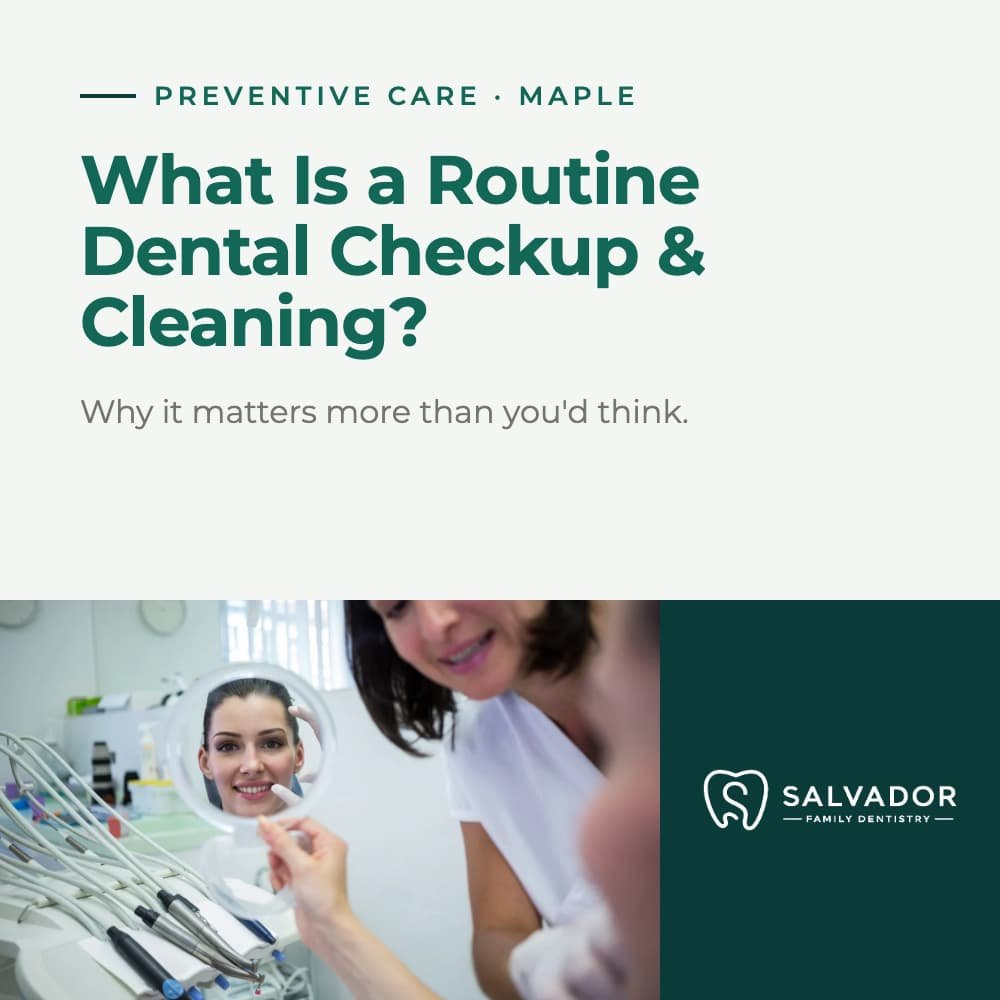
Most people have heard the same rule since childhood, see the dentist every six months, but a checkup and a cleaning are actually two different things that usually happen at the same visit. Understanding what each one specifically does, and why the twice a year rule is a starting point rather than a fixed law, helps you get more out of a visit you may already be booking anyway. At Salvador Family Dentistry, this guide covers both halves of a routine visit together, since that is how most patients actually experience them, along with how often you actually need to come in and what happens if it has been a while.
What Is a Routine Dental Checkup?
A dental checkup is the exam portion of your visit, where your dentist looks at your teeth, gums, bite, and any existing dental work to check for early signs of problems. This includes examining each tooth for decay, assessing gum health for inflammation or bleeding, checking existing fillings, crowns, or other restorations for wear, and reviewing X-rays when clinically indicated. An oral cancer screening is also typically part of a routine checkup, a quick visual and physical check of the soft tissues in your mouth, throat, and neck that most patients never notice happening but that catches problems earlier than waiting for symptoms to appear on their own.
What Is a Dental Cleaning?
A dental cleaning, sometimes called scaling and polishing, is a separate, hands-on process, typically performed by a hygienist, that removes plaque and tartar buildup from your teeth, particularly in spots your toothbrush and floss cannot fully reach at home, between teeth and along the gumline. Scaling can be done with hand instruments, an ultrasonic device, or a combination of both, depending on how much buildup is present and where it sits. Polishing follows, removing surface staining and leaving teeth feeling noticeably smoother.
Why Are They Usually Done Together?
Combining a checkup and cleaning into one appointment is efficient, and it lets your dentist examine your teeth right after the cleaning, when they are easiest to assess closely, plaque and tartar that might otherwise obscure a small area of decay have just been removed. This is why most routine dental visits describe both halves together, even though they are genuinely two different processes happening in the same appointment. If something is found during the exam, whether it is a small cavity, a cracked filling, or early gum disease, it is generally easier to plan the next step while you are already in the chair than to schedule a separate visit just to discuss it.
What Happens at a Combined Visit?
The visit typically opens with an exam, checking teeth, gums, and existing dental work, followed by X-rays if indicated. The cleaning follows, removing plaque and tartar and polishing the teeth, and a fluoride treatment is sometimes offered afterward depending on your individual risk of decay. A routine combined visit generally takes somewhere in the range of thirty to sixty minutes, though this varies depending on how much buildup has accumulated and whether X-rays are due. Before you leave, your dentist walks you through what was found and what, if anything, to watch, along with a recommendation for your next visit based on what was actually observed, not a generic schedule applied regardless of your specific situation. Our check-ups and cleanings service page covers this in more depth.
Why Do Cleanings Matter, Even With Good Home Care?
Plaque forms on teeth every day, even with good brushing, and left alone it hardens into tartar, which a toothbrush cannot remove. According to the Canadian Dental Association’s own guidance, flossing removes plaque and food particles from places a toothbrush cannot reach, particularly between teeth where a brush cannot reach at all. Tartar buildup along and under the gumline is a major contributor to gum disease, the leading cause of tooth loss in adults, which is why a professional cleaning does something home care alone cannot fully accomplish. Gum disease itself typically begins as gingivitis, a milder, reversible stage marked by redness and bleeding, and can progress to periodontitis, a more serious stage that affects the bone supporting your teeth, if plaque and tartar are left to build up over time. The Canadian Dental Care Plan is also worth knowing about as a resource for eligible patients.
How Often Should You Actually Come In?
The six month interval is a reasonable starting point, but it is not the same for everyone. Your dentist adjusts this recommendation based on your actual risk factors and what they observe at each visit, rather than applying the same interval to every patient in the practice regardless of circumstances.
Factors that can change your ideal interval
| Factor | General Effect |
| History of gum disease | May need more frequent cleanings |
| Smoking or diabetes | May need more frequent cleanings |
| Pregnancy | May need more frequent cleanings |
| Braces or other orthodontic appliances | May need more frequent cleanings |
| Consistently healthy gums, low risk | May be able to space cleanings out, per your dentist |
What Happens If You Skip Cleanings for a Long Time?
Plaque and tartar continue to build up whether or not you are seeing a dentist regularly, and the longer cleanings are skipped, the more tartar accumulates in places a toothbrush cannot reach, which can make gums more prone to bleeding and eventually more serious issues. In some cases, returning after a long gap means a more involved cleaning is needed to bring things back to a healthy baseline before returning to a routine interval, rather than the quick polish a six-month regular might expect. That said, coming back after a long gap is common, and there is no judgment about how much time has passed. The focus at that first appointment back is simply understanding where things stand now and building a realistic plan from there. Keeping up with regular visits is also one of the more reliable ways to avoid needing a dental implant later after a tooth is lost.
Caring for Your Teeth Between Visits
Brush twice daily with fluoride toothpaste and clean between teeth daily, following the Ontario Dental Association’s guidance on proper technique. Limit frequent sugary snacks and drinks, replace your toothbrush when the bristles wear out, generally every three to four months or sooner if the bristles fray, and address any new discomfort promptly rather than waiting to see if it resolves on its own. An antimicrobial or fluoride mouthwash can be a useful addition for some patients, though it is a supplement to brushing and flossing rather than a substitute for either. Cleaning your tongue, either with a toothbrush or a dedicated tongue scraper, also helps reduce the bacteria that contribute to plaque and bad breath, and it is an easy habit to add to an existing routine.
What Should You Ask When Choosing Where to Go?
A few honest questions help you find a good fit for ongoing preventive care.
What to consider, and what to ask
| Consideration | What to Ask |
| X-ray policy | Do you take X-rays on a fixed schedule, or based on individual clinical need? |
| Family scheduling | Can our family be seen together, or close together, in one visit? |
| Judgment-free returns | What happens if it has been years since my last visit? |
| Insurance and CDCP | Do you bill directly, and do you accept the Canadian Dental Care Plan? |
| Explanation style | Will you explain what you find in plain language, not just a generic recommendation? |
Why Salvador Family Dentistry Fits
Dr. Jack’s decades of experience and Dr. Luca’s continuing education training combine to give you trusted wisdom alongside current technique. We follow conservative X-ray guidelines rather than a fixed schedule, offer family block appointments so your whole household can be seen in one trip, and participate in the Canadian Dental Care Plan for eligible patients. If we spot something that needs attention, we can also take care of it right here in Maple, whether that means root canal treatment or dental implants, without needing to send you elsewhere for a separate consultation first.
Local Considerations for Maple Families
Families across Maple, Vaughan, King City, and Woodbridge often juggle school and work schedules, which is part of why family block appointments matter in practice, not just as a nice idea. Our central Maple location is easy to find and easy to park, and we work with most major insurance providers, billing directly where possible. As with any dental decision, it is worth confirming current appointment availability directly with the clinic, since these details can change over time. For families juggling multiple schedules across school, work, and activities, being able to book everyone back to back in one trip to Maple, rather than several separate visits scattered across the month, is often the more practical draw than any single feature of the visit itself.
Frequently Asked Questions
How often should I get a dental cleaning?
It depends on your individual risk, not a single fixed rule. Most patients do well on a six month schedule, but gum disease, smoking, diabetes, pregnancy, or braces can mean more frequent visits make sense, while some low-risk patients may be able to space visits out further.
What is the actual difference between a checkup and a cleaning?
The checkup is the exam, your dentist looking at your teeth, gums, and existing dental work to catch anything that needs attention. The cleaning is the hands-on removal of plaque and tartar, typically done by a hygienist. Most visits combine both in the same appointment for convenience.
Does a cleaning hurt?
Most patients find it is not painful, though those with sensitive teeth or gums, especially after a longer gap since the last visit, may feel mild discomfort during scaling. Let your hygienist know right away if anything feels uncomfortable so they can adjust their approach as they go.
Do you take X-rays at every visit?
No, X-rays are taken based on clinical need and your individual risk, not a fixed schedule applied to every patient the same way. This means your interval may reasonably differ from a family member’s, depending on your own history and what your dentist actually observes.
I haven’t been to the dentist in years, is it too late?
It is never too late, and we are completely judgment-free about how long it has been since your last visit. We will start fresh, assess where things genuinely stand, and build a realistic plan forward from there, rather than any lecture about the gap itself.
Whether it has been six months or six years, book a check-up and cleaning with Salvador Family Dentistry in Maple.