
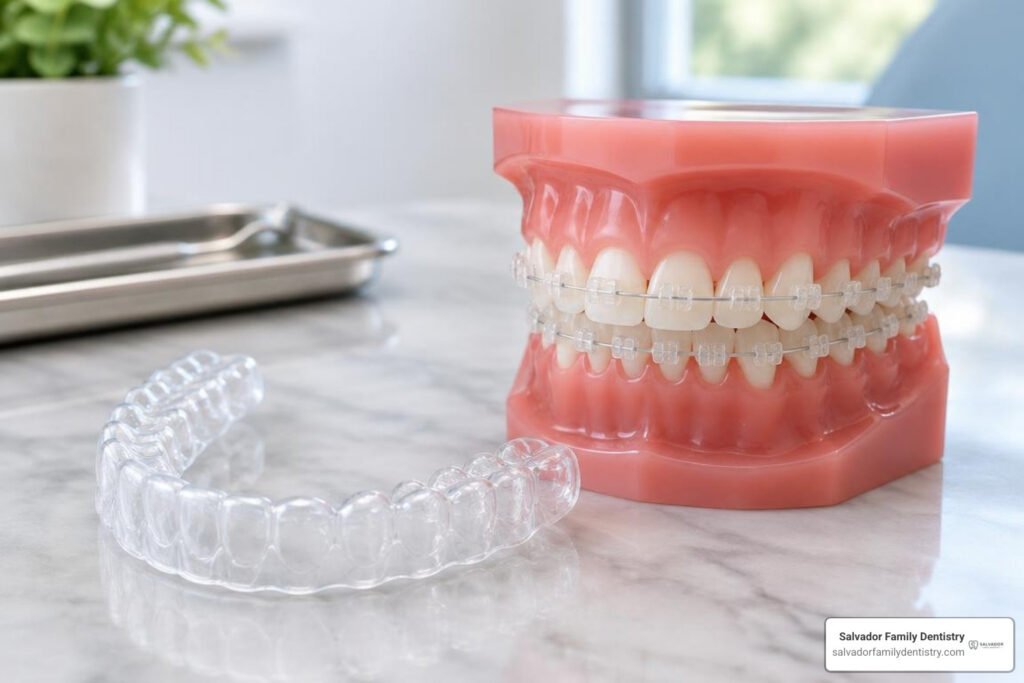
Understanding 3M Clarity Braces: Advanced Ceramic Technology
3M Clarity braces are aesthetic, translucent ceramic orthodontic systems that correct alignment and bite issues while blending with natural tooth shades. The Clarity line also includes clear aligner options for patients who prefer removable treatment. Fabricated from fine-grained translucent ceramic material, these brackets offer a less visible alternative to traditional metal braces while maintaining reliable orthodontic force. Unlike older cosmetic brackets made from opaque plastic or composite resins that could yellow over time, Clarity™ Advanced Ceramic Brackets are engineered from durable ceramic that resists surface discoloration from dark foods and beverages.
These brackets feature a low-profile design. Their dome-shaped contours, small footprint, and rounded edges help reduce friction against inner lip and cheek tissues. Built according to established prescription parameters (such as the standard MBT™ versatility system), they deliver continuous force to guide root movement and torque control.
Another key feature of this ceramic system is predictable debonding. Historically, removing ceramic brackets carried a risk of enamel fracture because ceramic is stiffer than metal. 3M incorporates a stress concentrator along the bracket base. When debonding instruments are applied at the end of treatment, this design directs compressive force across a specific break line, allowing the bracket to release cleanly without damaging natural enamel. For patients exploring comprehensive orthodontic solutions, this balances aesthetic appeal with enamel protection.
Clarity Advanced vs. Clarity Ultra Self-Ligating Brackets
The Clarity system includes both traditional twin-bracket models and self-ligating variations:
- Clarity Advanced (Conventional Twin Brackets): These brackets use tiny elastomeric ties (ligatures) or subtle wire ties to secure the archwire inside the bracket slot. They offer a compact profile and allow the use of clear ligatures for a discreet look, or colored bands for patients who prefer them.
- Clarity Ultra Self-Ligating Brackets: Rather than relying on elastic bands, Clarity™ Ultra Self-Ligating Brackets feature an integrated, translucent ceramic door mechanism.
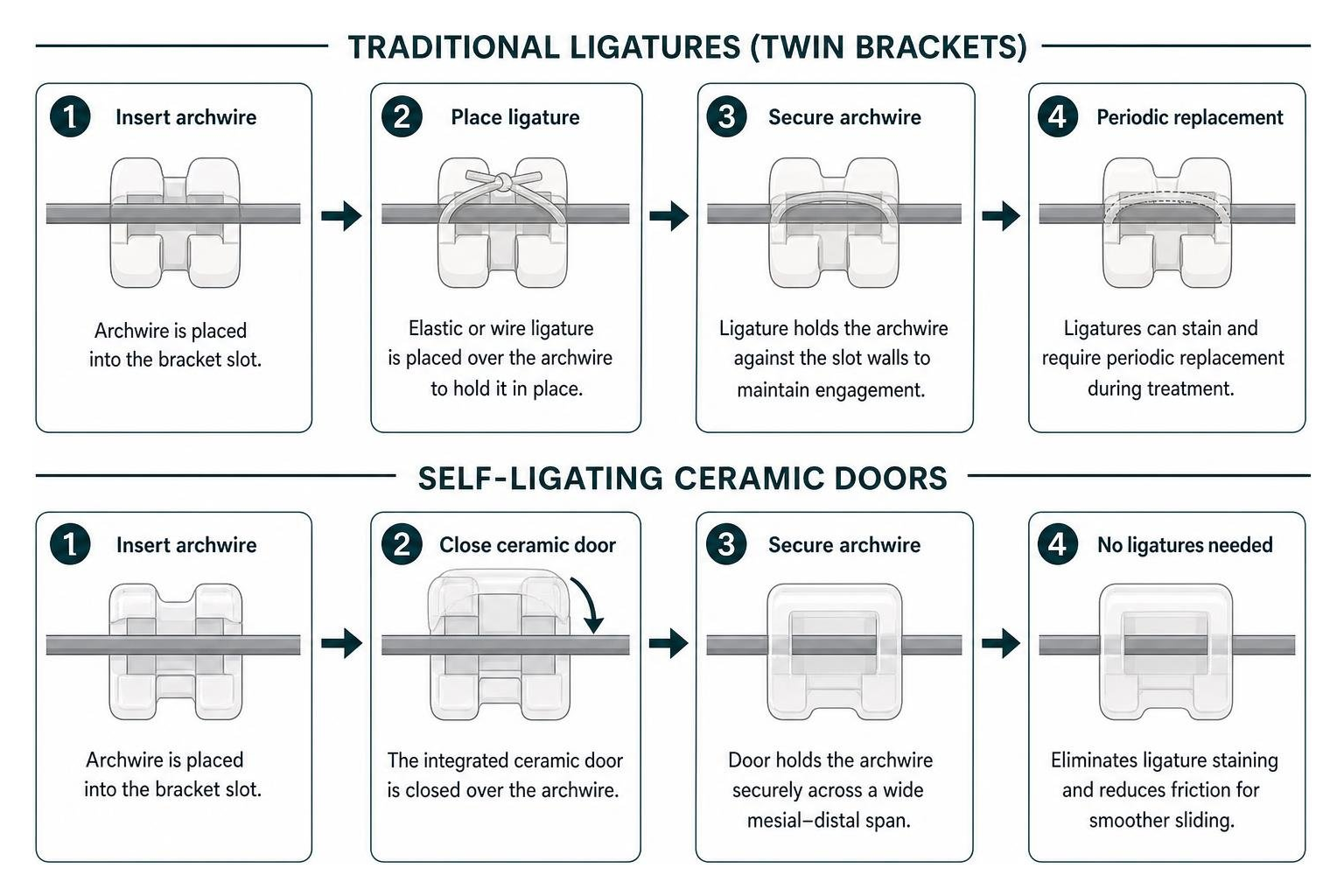
This built-in ceramic door holds the archwire securely in place across a wide mesial-distal span. By replacing elastic ligatures, self-ligating brackets help lower friction between the archwire and the bracket slot. This lower resistance allows teeth to slide more freely during early alignment phases. Additionally, self-ligating systems eliminate ligature staining from coffee or spices and simplify archwire adjustments, leading to faster routine visits.
The Science of APC™ Adhesive Pre-Coating Systems
Achieving reliable bond strength on enamel while keeping appointments efficient has traditionally required multiple clinical steps. 3M addresses this with its Adhesive Pre-Coated (APC™) technology. Instead of manually applying paste to each bracket base chairside, brackets can come pre-coated with consistent amounts of adhesive resin:
- APC™ II: Delivers a uniform layer of light-cure adhesive across each bracket base, ensuring steady bond strength and reducing preparation time.
- APC™ PLUS: Features a color-change adhesive that appears pink upon placement for clear margin visibility, then cures to a natural enamel shade under orthodontic curing lights.
- APC™ Flash-Free: Uses a nonwoven fiberglass mat saturated with low-viscosity resin. When pressed against the tooth, the resin wets out evenly without extruding excess material (“flash”) around the edges.
By eliminating manual flash cleanup before light curing, APC™ Flash-Free technology reduces bonding workflows from eleven steps down to five, cutting bonding chair time by approximately 40%. Clinical studies also indicate that uniform coverage reduces bond failures by up to 60%, protecting enamel from micro-leakage during treatment.
Comparing Aesthetic Orthodontic Treatments
Selecting the right orthodontic appliance involves weighing appearance, daily maintenance, and clinical biomechanics. Today, adult orthodontic patients represent roughly 1 in 3 cases, making low-profile solutions increasingly popular.
| Orthodontic Feature | 3M Clarity Ceramic Braces | Traditional Metal Braces | Custom Clear Aligners |
|---|---|---|---|
| Aesthetic Visibility | Low; translucent ceramic blends with enamel | High; visible metallic appearance | Very Low; transparent, smooth plastic trays |
| Appliance Type | Fixed (bonded directly to teeth) | Fixed (bonded directly to teeth) | Removable (must be worn 20–22 hours/day) |
| Material Composition | Fine-grained polycrystalline ceramic | High-grade stainless steel or titanium | Medical-grade polyurethane or multi-layer polymers |
| Suitability for Complex Cases | High; manages severe rotations, impactions, and bites | High; manages severe structural malocclusions | Moderate to High; best for mild-to-moderate shifts or hybrid setups |
| Stain Resistance | High (brackets do not stain; clear elastics can) | Impervious to dietary staining | High (replaced every 1–2 weeks) |
| Dietary Adjustments | Avoid hard, sticky, and chewy foods | Avoid hard, sticky, and crunchy items | None (trays are removed while eating and drinking) |
| Average Treatment Duration | 12 to 24 months | 12 to 24 months | 6 to 18 months |
3M Clarity Clear Aligners and Hybrid Treatment
For patients interested in removable options, 3M also offers an aligner system using two specialized materials:
- Clarity Aligners Flex: A thinner, flexible material (0.625 mm) engineered for gentle force delivery and comfort during initial leveling and alignment phases.
- Clarity Aligners Force: A more rigid material (0.75 mm) designed to provide continuous force for complex tooth movements and bite adjustments.
These aligner materials can be combined throughout treatment or paired with fixed ceramic brackets in a hybrid approach. For example, a patient with severe upper canine rotation and moderate lower crowding might begin with fixed ceramic brackets on the upper arch to manage difficult root torque, while using custom clear aligners on the lower arch. Digital planning platforms and optional remote monitoring tools allow clinicians to track movement and evaluate progress throughout treatment.
Treatment Time and Biomechanical Effectiveness
Both metal and ceramic fixed appliances apply continuous, gentle pressure to the periodontal ligament, stimulating natural bone remodelling. As pressure is applied, bone resorbs in the direction of movement and rebuilds behind the tooth, securely shifting it into alignment.
Fixed ceramic braces remain active 24 hours a day, eliminating the compliance demands of removable trays that must be worn for 20 to 22 hours daily. For patients with severe malocclusions, deep overbites, or significant rotations, fixed 3m clarity braces provide precise, three-dimensional control over root positions. Treatment duration with ceramic brackets generally mirrors traditional braces, averaging between 12 and 24 months.
Clinical Process, Candidacy, and Placement
Starting treatment begins with a thorough diagnostic assessment to evaluate dental health, jaw joints, and facial balance.
During this initial visit, diagnostic records are gathered using digital impressions, panoramic X-rays, and clinical photography. These records generate a precise 3D model of your dentition, allowing clinicians to plan bracket positioning and anticipate tooth movement. This approach supports comprehensive adult orthodontics while ensuring treatments address functional bite harmony and aesthetic goals.
Who Is a Good Candidate for 3M Clarity Braces?
Ceramic brackets are well-suited for a variety of orthodontic cases:
- Adult Professionals and Image-Conscious Teens: Individuals seeking effective alignment without noticeable metal brackets.
- Complex Malocclusions: Patients with severe crowding, spacing, rotations, or bite discrepancies (such as overbites, underbites, and crossbites) that require continuous mechanical control.
- Patients Concerned About Aligner Compliance: Those who prefer a fixed appliance that works continuously without having to manage removable trays.
Clinical Considerations: In cases of severe deep overbites, placing ceramic brackets on lower front teeth can sometimes cause them to contact the upper teeth during chewing. Because ceramic is harder than natural enamel, this contact can lead to tooth wear. In these instances, clinicians may recommend placing ceramic brackets on the upper arch and low-profile metal brackets on the lower arch, or using clear aligners to safely open the bite. Athletes in high-contact sports can also wear ceramic braces comfortably with a properly fitted orthodontic mouthguard.
What to Expect During the 3M Clarity Braces Fitting Procedure
Getting ceramic braces placed is a comfortable, non-invasive appointment that typically takes about 60 minutes:
- Cleaning and Isolation: Teeth are polished and isolated using cheek retractors to keep the enamel dry.
- Enamel Conditioning: A gentle conditioning gel is applied to the tooth surface for a few seconds to create microscopic pores for bonding, then rinsed and dried.
- Bracket Placement: Using APC™ pre-coated brackets or clinical bonding resin, each ceramic bracket is positioned on the tooth surface according to precise prescription angles.
- Light Polymerization: A high-intensity curing light is applied to each bracket for several seconds, hardening the adhesive instantly.
- Archwire Insertion: A thin archwire (often made of flexible nickel-titanium) is threaded through the slots and secured with clear elastomeric ligatures or closed within self-ligating doors.
Cost, Daily Maintenance, and Recovery Outlook
Investing in orthodontic treatment supports long-term oral function and smile aesthetics. The cost for 3M Clarity ceramic braces generally ranges from $3,000 to $8,000, depending on case complexity, treatment duration, and regional factors.
Many dental insurance plans provide orthodontic benefits that cover ceramic braces similarly to traditional metal systems. Flexible spending accounts (FSA), health savings accounts (HSA), and structured payment plans can also help make treatment manageable.

Proper oral hygiene and dietary care protect your brackets and keep your teeth healthy throughout treatment:
- Foods to Avoid:
- Hard and crunchy foods: Hard candies, whole nuts, ice cubes, and thick crusts.
- Sticky and chewy items: Caramels, taffy, chewing gum, and licorice.
- Tough foods that require biting with front teeth: Whole apples, raw carrots, and corn on the cob (cut these into bite-sized pieces instead).
- Recommended Hygiene Routines:
- Brush thoroughly after every meal with a soft-bristled manual or electric toothbrush and fluoride toothpaste.
- Clean between brackets and under the archwire daily using interproximal brushes, floss threaders, or orthodontic water flossers.
- Finish with an alcohol-free, antibacterial mouthwash to rinse away food particles and support gum health.
Managing Discomfort and Protecting Brackets
Following bracket placement or periodic wire adjustments, you may experience mild soreness in your teeth and jaw as they adapt to new alignment forces. This typically peaks within 24 to 48 hours and resolves over a few days.
- Soreness Relief: Over-the-counter pain relievers (such as ibuprofen or acetaminophen) can help ease post-adjustment tenderness. Sticking to a soft diet (soups, smoothies, yogurt, and pasta) for the first few days also minimizes pressure on sensitive teeth.
- Soft Tissue Care: If a bracket or wire end rubs against your cheek or lips, apply a small piece of orthodontic wax over the area to create a smooth surface while your mouth adjusts.
Long-Term Retention and Results
Completing your active orthodontic treatment is a significant milestone, but the retention phase is essential for maintaining your new alignment. Once brackets are removed, teeth require time to stabilize within the surrounding bone and gum tissue:
- Clear Retainers: Custom, transparent retainers that fit closely over your teeth to hold them in position. They are typically worn full-time for the first few months, transitioning to nighttime wear as bone density stabilizes.
- Fixed Lingual Retainers: A discreet, bonded wire placed behind the front teeth to provide continuous protection against shifting.
Wearing your retainers as directed ensures your teeth stay aligned and protects your investment in your smile.
Frequently Asked Questions About Aesthetic Braces
Do 3M Clarity ceramic brackets stain easily from coffee or wine?
No. The ceramic material used in 3M Clarity brackets is dense and resistant to staining from coffee, tea, red wine, and dark sauces. However, if your treatment uses clear elastomeric ties (ligatures) with conventional brackets, those elastic bands can absorb pigments over time. Maintaining good oral hygiene, rinsing with water after drinking dark beverages, and receiving fresh ligatures at each adjustment visit will keep your braces looking clean and clear.
How long does treatment take with ceramic brackets?
Most patients complete ceramic bracket treatment in 12 to 24 months, with an average duration of about two years. Simpler alignment concerns may resolve in under a year, while complex bite corrections can take up to 30 months. Treatment time depends on biological response, case complexity, and keeping scheduled adjustment appointments.
Can adults choose ceramic brackets over aligner trays?
Yes. Many adults choose ceramic brackets because they offer continuous alignment without requiring the daily discipline of tracking wear time with removable trays. Ceramic braces manage severe rotations, vertical movements, and significant bite corrections effectively while maintaining a subtle appearance. Adults who want to explore all discreet options can also review adult clear aligner options to determine the best fit for their daily routine and treatment goals.
Conclusion
Achieving a healthy, aligned smile no longer requires choosing between cosmetic preferences and effective orthodontic results. With advanced ceramic brackets, self-ligating systems, and modern clear aligners, patients have multiple discreet treatment options to choose from.
At Salvador Family Dentistry, our two-generation team combines conservative treatment principles with modern digital dental technology to provide comprehensive, individualized care. Whether you are considering ceramic braces or clear aligners, we invite you to explore modern clear aligner solutions and schedule a consultation with our Maple, Ontario team to find the right path toward your smile goals.